ITA ENG


| ERANOS-JUNG LECTURES 2026 | Crossing the Bridge of Dreams again: The Arts and the Underworld
EJL2026-02
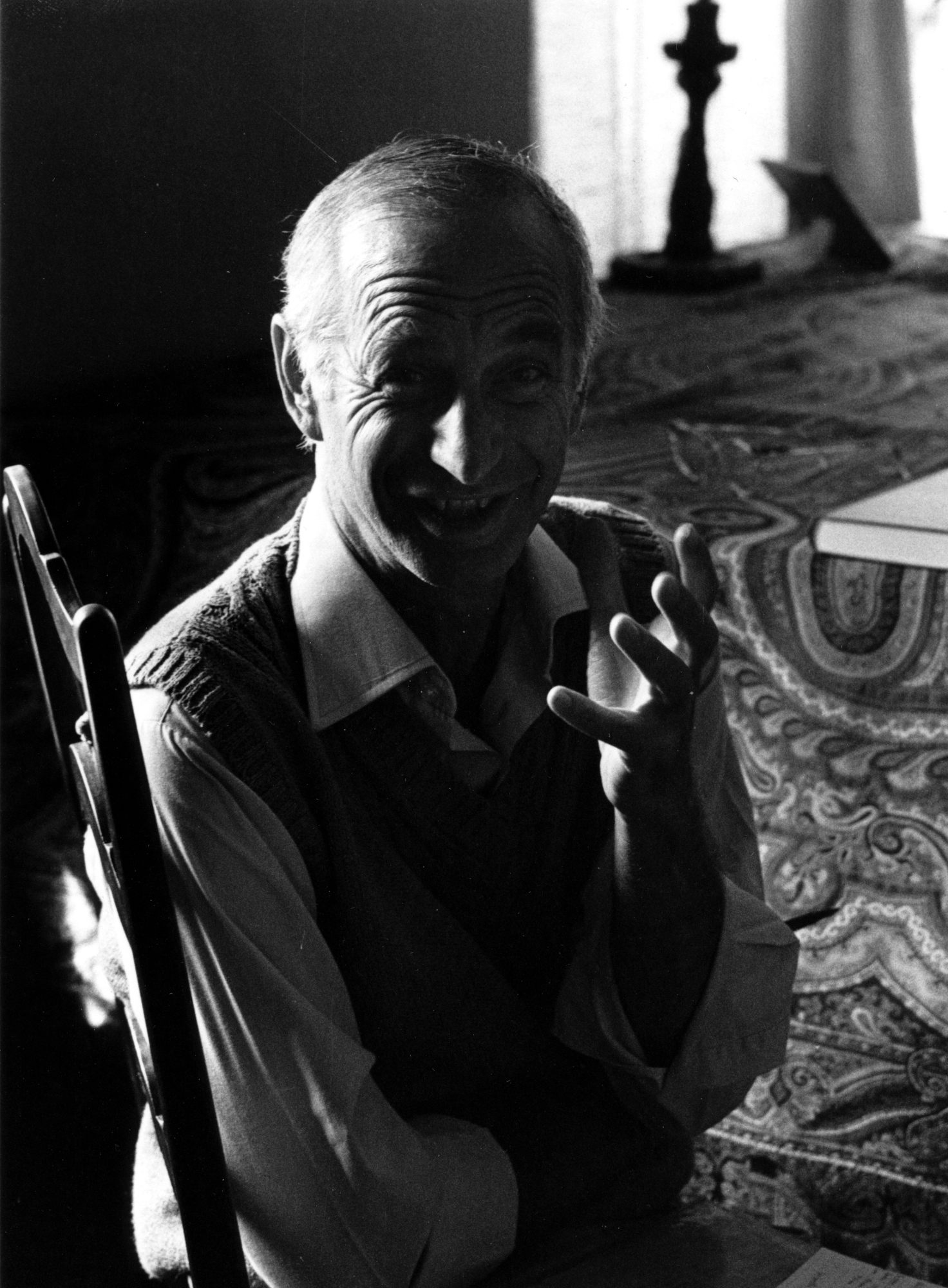
Lecture: Crossing the Bridge of Dreams again: The Arts and the Underworld
Lecturer: Monica Ferrando (artist)
Date: Friday, March, 2026, 6:30 p.m.
Place: Monte Verità (Ascona), Auditorium and Zoom: https://us02web.zoom.us/j/82908883141
Cycle: Eranos-Jung Lectures 20265 - Guided by the Daimon. James Hillman's (1926-2011) Legacy on the Hundredth Anniversary of his Birth
Language: Italian
Moderator: Riccardo Bernardini (Eranos Foundation, Ascona / SUFFP, Lugano)
Followed by discussion with the audience and aperitif
The video recording of the conference will be viewable on the official YouTube channel of the Eranos Foundation.
Lecture Presentation
Faced with the tyranny of the visual, which has degenerated into a seductive function of control, the underworld remains the only bulwark. It was James Hillman, in his descent into it via “the bridge of dreams,” who revealed its growing yet neglected necessity. One wonders, then, whether it is not precisely this space/time of the soul, in its capacity as an inexhaustible source of shadow and dream, that is the crucible of an image restored to its generative link with the invisible. If the attraction to the nocturnal world, as a painful surrender to a process of ineffective mediation and renunciation of all defensive ends, precisely by calling into question the heroic ego and its daytime pretensions, cannot generate, like Maia Hermes in the arcade cave, an unservile image, a particle of the mundus imaginalis intrinsic to the soul of the world in its unpredictable movement of springing autonomy; autonomy which, as erotic genativity, may also open itself to the arts of the visible on condition that it reconnects the visible of ge to the invisible of chton.
Lecturer' Bio-bibliography
Monica Ferrando studied philosophy and painting in Turin and then in Berlin, with the abstract painter Frank Badur. She made her debut in 1991 in Mantua with an exhibition entitled Kore, presented by Ruggero Savinio. Since then, she has held solo exhibitions in Gelsenkirchen-Buer, Florence, Milan, Scicli, and Frankfurt, and has participated in various group exhibitions, including the 2011 Venice Biennale. In 2001, her pastels became part of the collection of the Uffizi's Department of Prints and Drawings. In the same year, she received the Tarquinia-Cardarelli Painting Prize. She has translated and edited the Italian editions of Herman Usener's The Names of the Gods; Erwin Panofsky's Hercules at the Crossroads; Avigdor Arikha's Painting and the Gaze; Gustav Sjöberg's The Flowering Matter of the Whole; and D.H. Lawrence's Etruscan Places. She is the author, with Arturo Schwarz, of Avigdor Arikha; with Giorgio Agamben, of La ragazza indicibile. Mito e mistero di Kore (The Unspeakable Girl: Myth and Mystery of Kore). She has also published L'oro e le ombre (Gold and Shadows) (2015), Il regno errante. L’Arcadia come problema politico (The Wandering Kingdom. Arcadia as a Political Problem) (2018), L’elezione e la sua ombra. Il cantico tradito (The Election and Its Shadow: The Betrayed Canticle) (2022), Arcadia sacra (Sacred Arcadia) (2024), and Un anno con Platone (A Year with Plato) (2024). Poems have been published in "Smerillana" and "Snow lit. rev." (tr. Barry Schwabsky). She illustrated A. Barnett's translation of Elsa Morante's poems (Alibi and Narcissus, 2024). A monograph of his paintings was edited by Francesco Donfrancesco (2000). Among his recent exhibitions, we mention On White (London, 2019), Bianco nero. In levità passare (Rome, 2020), La voce della terra, ceramiche (Deruta, 2025, texts by F. Cuniberto, E. Dattilo, and N. Stringa). He edits the online magazine "De pictura."
--
In 2026, the Eranos Foundation intends to honor a figure who has brought prestige to the history of its meetings. This figure is the American psychologist James Hillman (1926-2011), whose 100th birthday is being celebrated this year. A highly regarded speaker at the famous Eranos Tagungen on several occasions, his innovative and courageous thinking contributed to the cultural renewal of analytical psychology, developing Jung's intuition of archetypes in unexpected directions and decisively returning the psyche to its imaginal role—more than a terrain to be interpreted, a horizon to be recognized and inhabited. This year, as we did last year with Carl Gustav Jung on the 150th anniversary of his birth, we do not intend to study Hillman analytically, but rather to be inspired by some of his most disruptive perspectives, allowing them to interact with the issues that concern us most today. The result will therefore be a very free and open dialogue with relevant aspects of his thinking, with the aim of shedding light on the current situation. Each speaker will thus be inspired as they see fit by a style of thinking that has taken psychology beyond the strictly clinical dimension, making it a heuristic tool for better understanding society and individuals. This is the lesson we will try to take advantage of.


